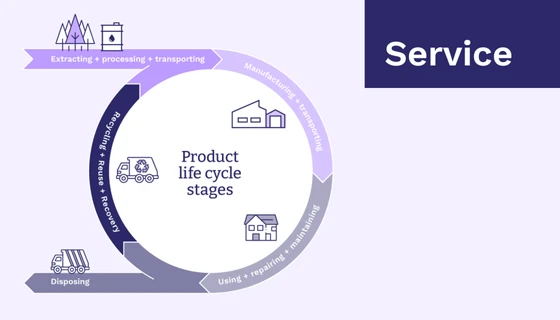
A Life Cycle Assessment (LCA) comparing the sustainability performance of Greenshell Mussels and Pacific Oysters farmed in New Zealand with other sources of dietary protein.
We assessed the carbon footprint of the farmed shellfish over their entire life cycle
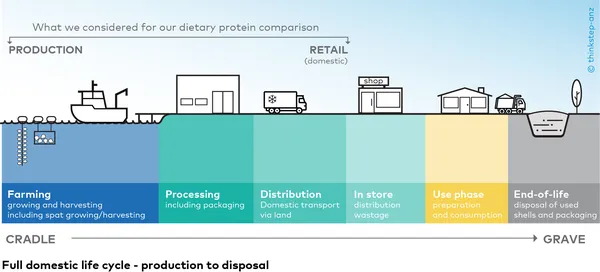
Our analysis included the carbon footprint of shellfish through the stages of:
- farming
- harvesting
- processing
- packaging
- chilled distribution to domestic retail
- preparing
- consumption
- disposal of used shells and packaging
The carbon footprint of shellfish differ between the types of products
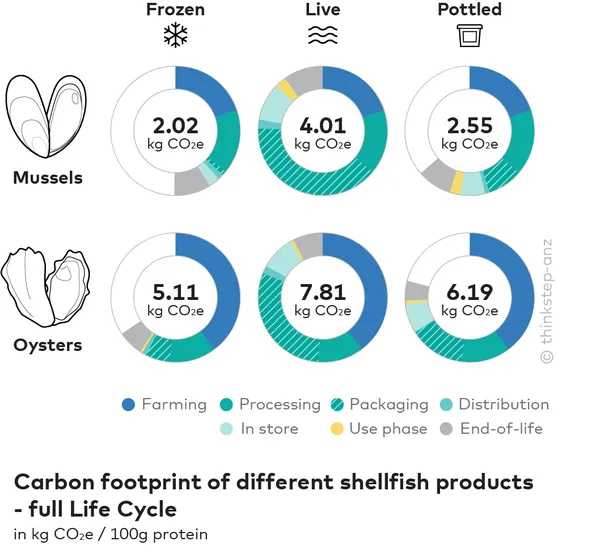
The carbon footprint of mussels and oysters across their entire life cycle depends on the type of products they will become — frozen half shell, live, or potted meat.
This is due to differences in:
- packaging needed for each product (live and potted products require more packaging)
- rate of wastage (frozen products produce less waste)
We compared eight different dietary proteins to oysters and mussels farmed in New Zealand
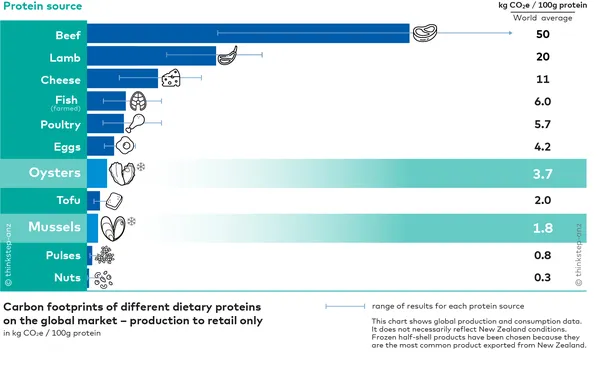
Our study compares the carbon footprint of producing 100 grams of mussel or oyster protein to producing the equivalent amount of a range of dietary proteins.
We used a ‘cradle to domestic retail’ approach which covers all stages from farming to retail for the comparative part of the study. Life cycle stages after production — which include international distribution, consumers’ cooking preferences, and the disposal at end-of-life — introduce a high level of variability and therefore, were not included in the comparison.
The carbon footprint of New Zealand shellfish is comparable to tofu on the global market
New Zealand mussels and oysters are among the animal protein sources with the lowest carbon footprint. Shellfish farmed in New Zealand have a lower carbon footprint than all other animal-derived protein sources, including farmed fish.
There is still room to further reduce the impact of this lower carbon source of protein
The results of this LCA study provide Aquaculture New Zealand with the data they need to back up the environmental performance of their shellfish products when compared to other forms of animal proteins.
We also highlight the actions that bring down the carbon footprint of New Zealand shellfish even more.
Get the main findings of the LCA study our case study "A life cycle assessment of mussels and oysters: In a nutshell” below.
The study was jointly funded by the New Zealand Ministry for Primary Industries (Fisheries New Zealand) and Aquaculture New Zealand.