
Our sustainability Need to Know guides
Sustainability tools and concepts can seem daunting, we know. We’re here to help, with our suite of Need to Know guides.
They’re short, they summarise what you need to know (and leave out what you don’t), and we’ve written them in plain English.
These guides will be helpful for
- Busy executives who want a quick summary of a concept
- Sustainability professionals (need to influence your leadership team?)
- Those new to sustainability looking for some simple explanations.
LCA & EPD
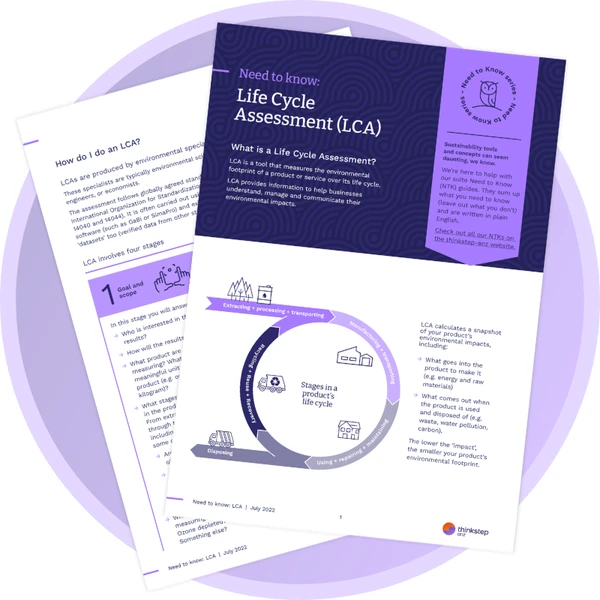
Life cycle assessment (LCA)
Life cycle assessment is a tool that measures the environmental footprint of a product or service over its life cycle. It provides information to help businesses understand, manage and communicate the environmental impacts of their products.
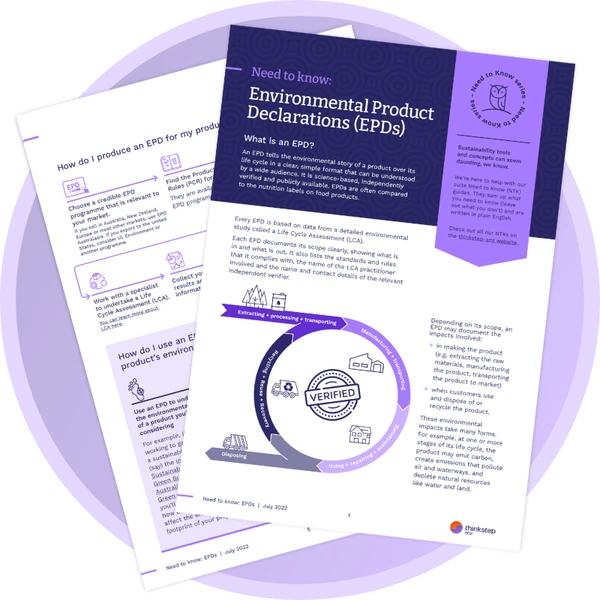
Environmental product declarations (EPDs)
Environmental product declarations (EPDs) tell the environmental story of a product over its life cycle in a clear, simple format. They are often compared to the nutrition labels on food products.
Circular economy
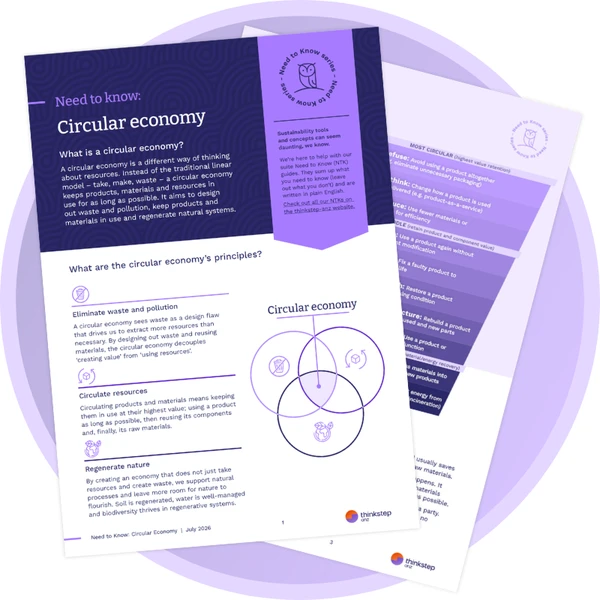
Circular economy
The circular economy (CE) is a concept that changes how we produce and consume goods. It uses systems thinking to design out waste and pollution, keep products and materials in use and regenerate natural systems.
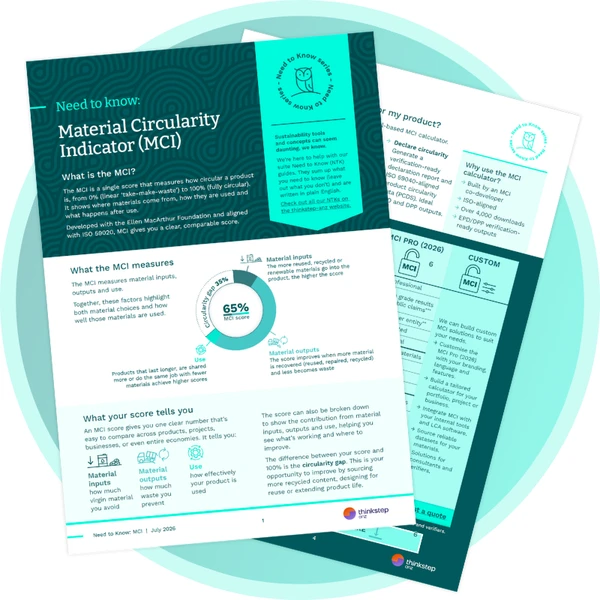
Material Circularity Indicator
The Material Circularity Indicator (MCI) measures how circular a product is and shows where materials come from, how they are used and what happens after use.
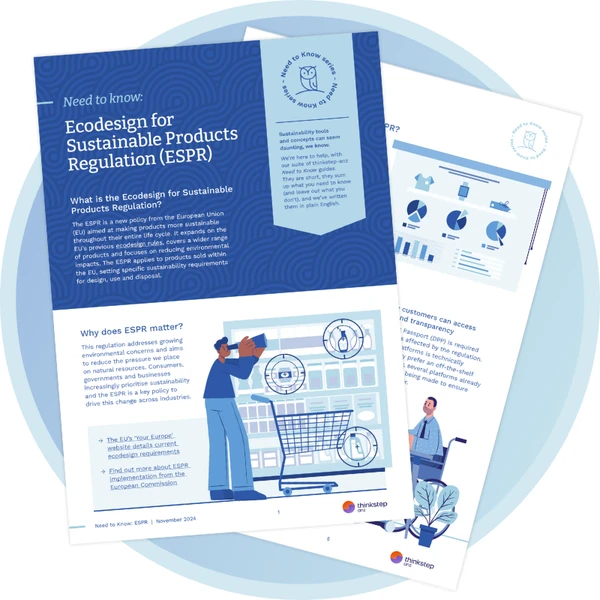
Ecodesign for Sustainable Products Regulation (ESPR)
The ESPR is a new policy from the European Union (EU) aimed at making products more sustainable throughout their entire life cycle. It expands on the EU’s previous ecodesign rules, covers a wider range of products and focuses on reducing environmental impacts.
Carbon
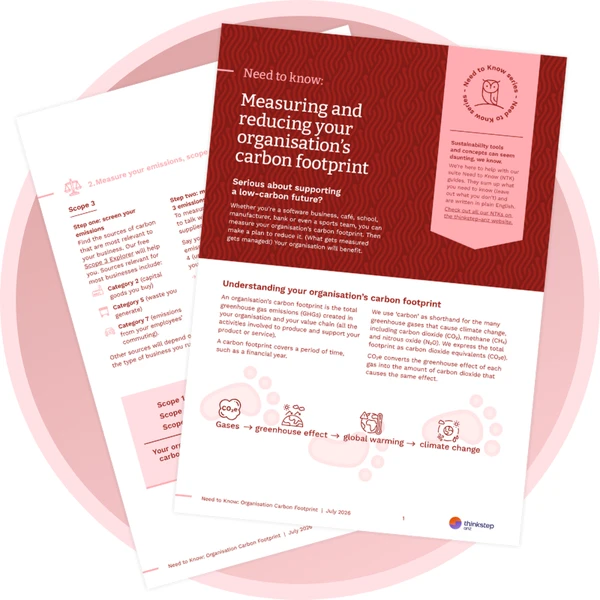
Organisation carbon footprint
Whether you’re a software business, café, school, manufacturer, bank or even a sports team, you can measure your organisation’s carbon footprint. Then make a plan to reduce it – what gets measured gets managed! Your organisation will benefit.
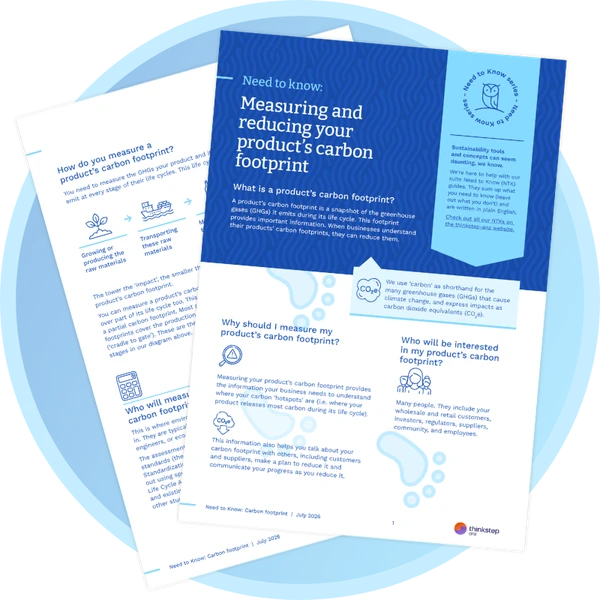
Product carbon footprint
A product’s carbon footprint is a snapshot of the greenhouse gases (GHGs) it emits during its life cycle. This footprint provides important information. When businesses understand their products’ carbon footprints, they can reduce them.
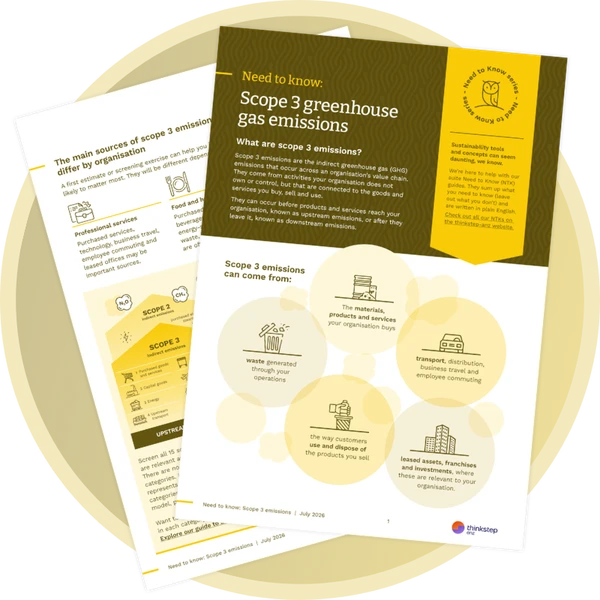
Scope 3 emissions
Scope 3 emissions are the greenhouse gas emissions that sit in an organisation’s ‘value chain’. They come from both up and downstream in a supply chain and cover emissions from things like the goods and services organisations buy and sell to customers.

Carbon in the built environment
The building and construction industry is a major source of GHGs. A building or infrastructure project generates carbon emissions throughout its life cycle, from producing materials and constructing the asset to operating and maintaining it, as well as what happens to the asset at the end of its life.
Strategy
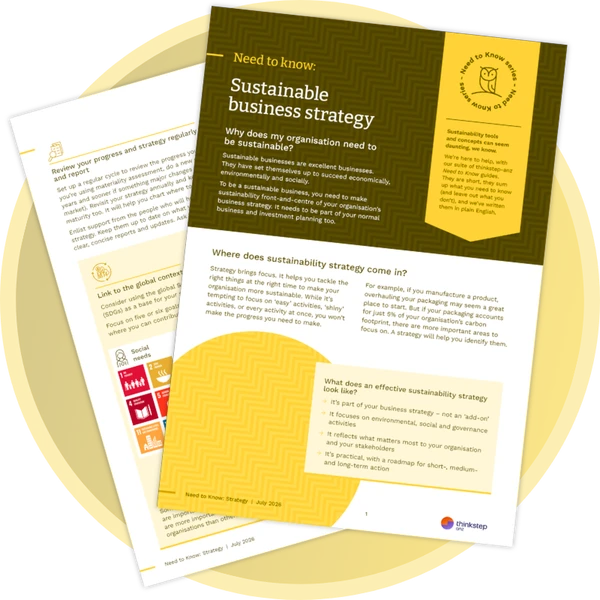
Sustainable business strategy
Sustainable businesses are excellent businesses. To be a sustainable business, you need to make sustainability front-and-centre of your organisation's business strategy.
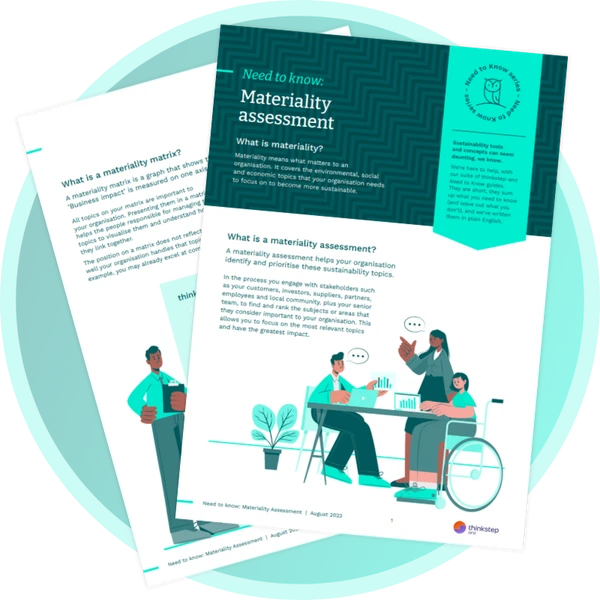
Materiality assessment
Materiality means what matters to an organisation. A materiality assessment helps your organisation identify and prioritise sustainability topics.
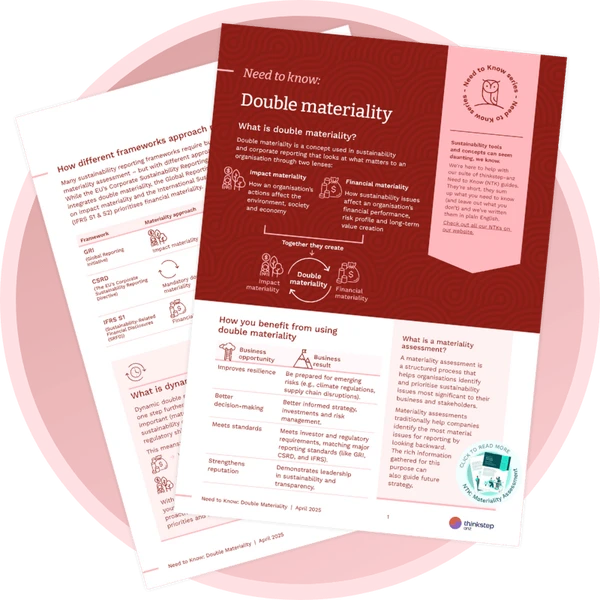
Double materiality
Double materiality looks at what matters to an organisation through the lenses of impact materiality (how an organisation affects the environment, society and economy) and financial materiality (how sustainability issues affect an organisation’s financial performance).
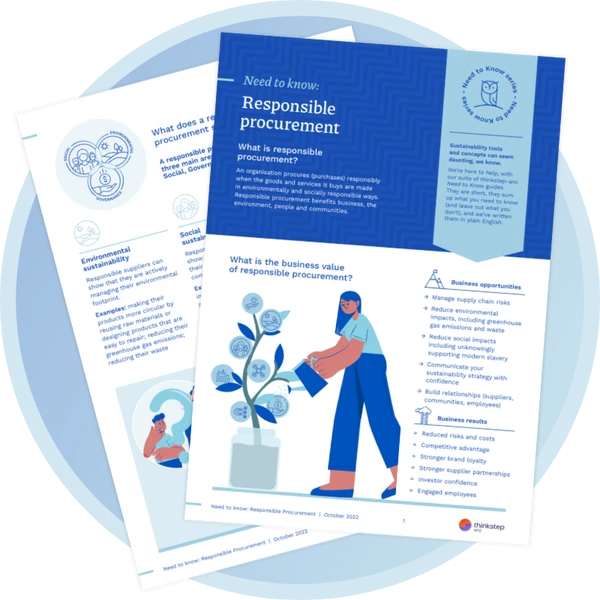
Responsible procurement
An organisation procures (purchases) responsibly when the goods and services it buys are made in environmentally and socially responsible ways. Responsible procurement benefits business, the environment, people and communities.
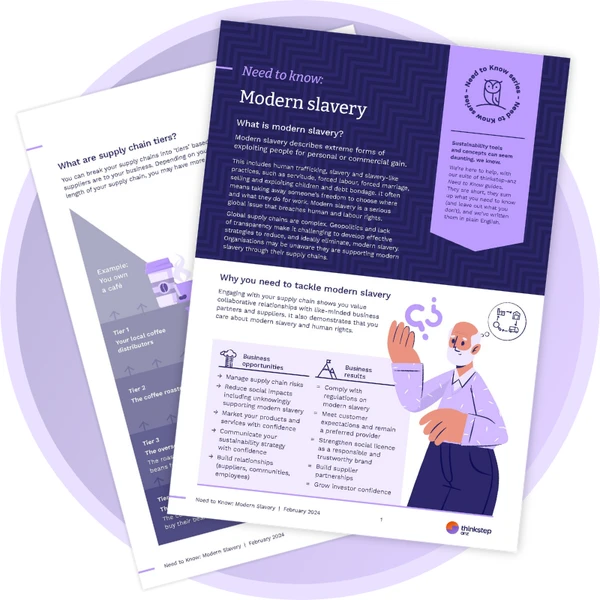
Modern slavery
Modern slavery describes extreme forms of exploiting people for personal or commercial gain. Organisations may be unaware they are supporting modern slavery through their supply chains. Learn how your business can help tackle this global issue.
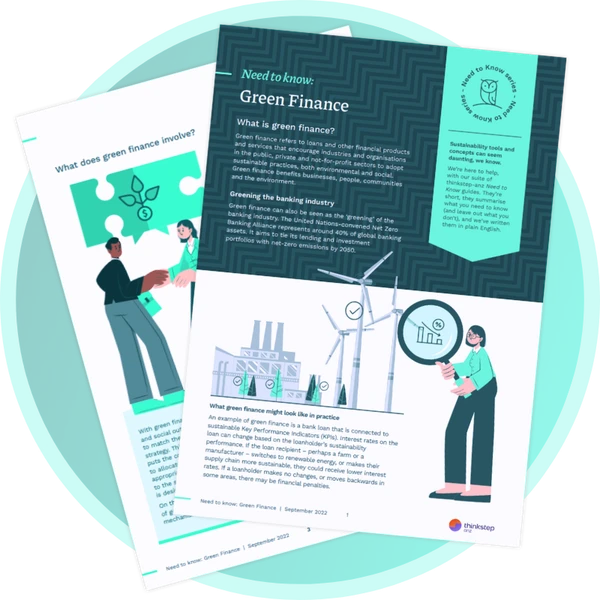
Green finance
Green finance refers to loans and other financial products that encourage the adoption of sustainable practices, both environmental and social. Green finance benefits businesses, people, communities and the environment.
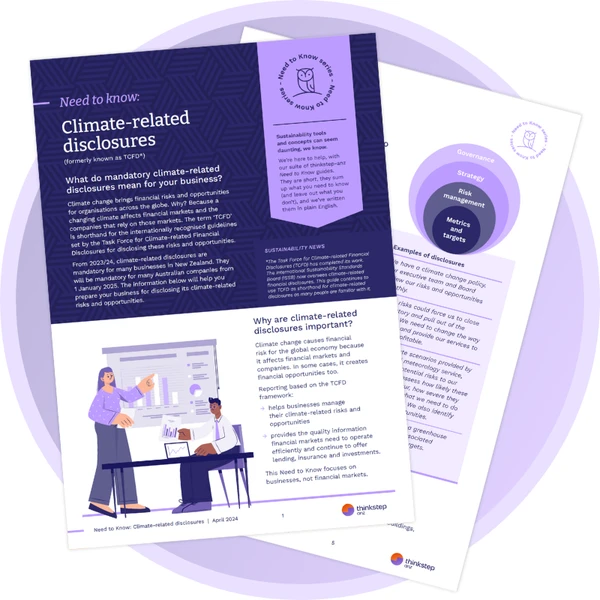
Climate-related disclosures
Climate change brings financial risks and opportunities for organisations across the globe. A changing climate affects financial markets and the companies that rely on those markets. This guide will help you prepare your business for disclosing its climate-related risks and opportunities.
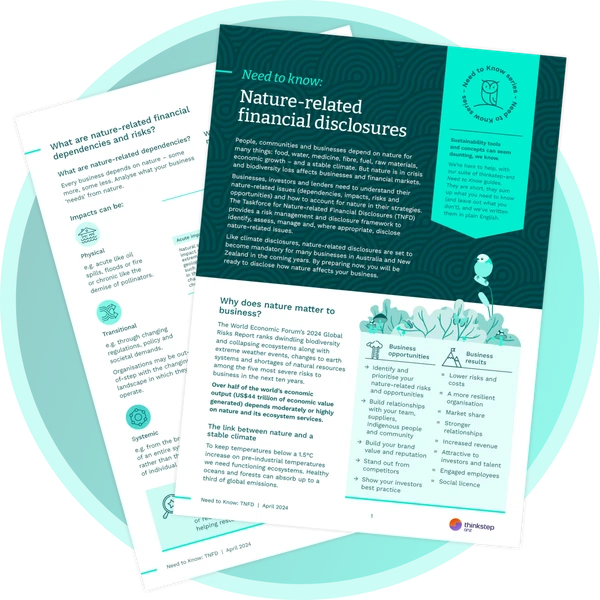
Nature-related financial disclosures
Businesses, investors and lenders need to understand their nature-related issues and how to account for nature in their strategies. The Taskforce for Nature-related Financial Disclosures (TNFD) provides a framework to identify, assess, manage and, where appropriate, disclose nature-related issues.
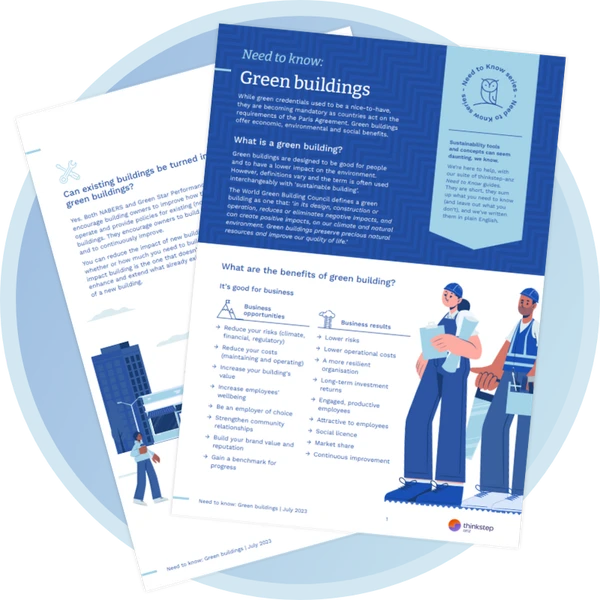
Green building
Green buildings are designed to be good for people and to have a lower impact on the environment.
More topics coming soon!
Keen to learn more? Please contact us, our specialists would love to talk with you: meet@thinkstep-anz.com