
What you Need to Know about double materiality
We've packaged all the information on this page into one easy PDF.
What is double materiality?
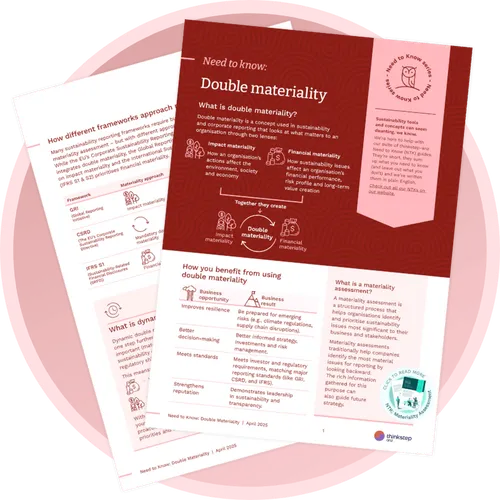
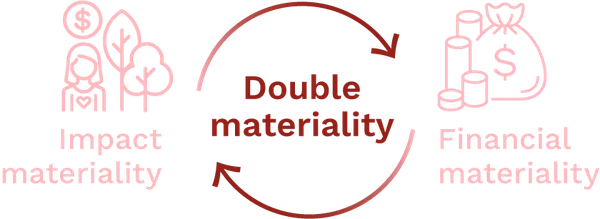
Double materiality is a concept used in sustainability and corporate reporting that looks at what matters to an organisation through two lenses:
Impact materiality
How an organisation’s actions affect the environment, society and economy.
Financial materiality
How sustainability issues affect an organisation’s financial performance, risk profile and long‑term value creation
Together they create
What is a materiality assessment?
A materiality assessment is a structured process that helps organisations identify and prioritise sustainability issues most significant to their business and stakeholders.
Materiality assessments traditionally help companies identify the most material issues for reporting by looking backward. The rich information gathered for this purpose can also guide future strategy.
Like to learn more? Get in touch with our strategy expert
How you benefit from using double materiality
| Business opportunities | Business results |
|---|---|
| Improves resilience | Be prepared for emerging risks (e.g. climate regulations, supply chain disruptions). |
| Better decision-making | Better informed strategy, investments and risk management. |
| Meets standards | Meets investor and regulatory requirements, matching major reporting standards (like GRI, CSRD, and IFRS). |
| Strengthens reputation | Demonstrates leadership in sustainability and transparency. |
Let’s look at some examples:

Construction and infrastructure
Impact materiality: If your construction company uses imported materials with a high carbon footprint, this contributes to climate change. Switching to locally sourced, low-carbon alternatives (like mass timber or recycled steel) reduces your impact.
Financial materiality: Imported goods with high embodied carbon may become the focus for specific carbon tariffs, increasing the cost of materials.

Agriculture and food production
Impact materiality: The way food is produced has a major impact on soil health, biodiversity, and emissions. Companies using regenerative farming or investing in methane reduction strategies are reducing their environmental impact.
Financial materiality: Farming methods that degrade soils lead to increasing use of artificial fertilisers, pushing up production costs.

Retail and consumer goods
Impact materiality: Fashion brands focusing on circular economy models (such as repair, resale, or rental services) can reduce their footprint and attract ethically conscious consumers.
Financial materiality: In Australia, the Australian Competition and Consumer Commission (ACCC) is cracking down on greenwashing. If a company makes misleading sustainability claims, it could face fines and reputational damage.

Financial services
Impact materiality: The financial sector plays a major role in shaping investment in sustainable businesses. A bank or superannuation fund that prioritises fossil fuel-free investments is reducing its negative impact on climate change.
Financial materiality: Investors are increasingly looking at climate risk when making decisions. In NZ and Australia, banks must disclose climate-related
financial risks.

thinkstep-anz Need to Know series
This page is part of a series that simplifies sustainability topics. Explore the rest of our series.
How different frameworks approach materiality
Many sustainability reporting frameworks require businesses to undertake a materiality assessment – but with different approaches on double materiality. While the European Union’s Corporate Sustainability Reporting Directive (CSRD) fully integrates double materiality, the Global Reporting Initiative (GRI) focuses on impact materiality and the International Sustainability Standards Board (IFRS S1 & S2) prioritises financial materiality.
| Framework | Materiality approach | What it focuses on | Stakeholder perspective |
|---|---|---|---|
GRI (Global Reporting Initiative) |
Impact materiality |
How a business affects society and the environment. |
Broad perspective, including communities, NGOs, regulators and employees. |
CSRD (The EU’s Corporate Sustainability Reporting Directive) |
Mandatory double materiality |
How a business affects society and the environment, how society and the environment affect the business and the financial implications. |
Investors and societal stakeholders. |
IFRS (Sustainability-Related Financial Disclosures (SRFD)) |
Financial materiality |
Sustainability-related risks and opportunities that affect a business’s financial performance. |
Investors, financial markets. |
What is dynamic double materiality?
Dynamic double materiality takes double materiality one step further. It recognises that what is considered important (material) will change over time as sustainability challenges (including climate risks, regulatory shifts and stakeholder expectations) evolve.
This means:
- What affects your business today might not be the same in the future.
- Your business’s impact on the environment and society can also change.
With a dynamic double materiality approach, your business can remain responsive and proactive while considering sustainability priorities and financial risks and opportunities.
How do you apply dynamic double materiality?
Dynamic double materiality means that you regularly review what’s important and adapt to changes. Here’s how:
1. Keep materiality under review
- Review what’s important at least once a year or sooner if major changes occur (e.g. new regulations, shifts in market trends).
Example: A retail company adjusts its materiality focus from single-use plastics (2022) to packaging circularity (2024) in response to new sustainability regulations.
2. Identify emerging material issues
- Use trend and scenario analysis to spot issues that may become important in the next 3-5 years (e.g. AI, climate change, circular economy).
- Engage with your stakeholders about future challenges so you can anticipate sustainability issues before they become financially material.
Example: An energy company surveys regulators and customers on future decarbonisation challenges.
3. Think ahead with scenarios
- Test future financial risks using 1.5°C and >2.5°C climate scenarios (aligned with IFRS S2).
- Plan for different possible futures to make your business more resilient.
Example: A mining company models how carbon pricing and regulation could impact profitability over the next decade.
4. Balance your stakeholders’ needs with financial priorities
- Engage a broad group of stakeholders (e.g. customers, communities, regulators) using GRI and CSRD frameworks.
- Evaluate financial risks and opportunities in line with IFRS standards to keep investors informed.
Example: A tech company links data privacy concerns (impact materiality) with regulatory compliance costs (financial materiality).
5. Make materiality part of your strategy
- Use your materiality assessment to inform business decisions – not just to tick compliance boxes.
- Integrate findings into your corporate strategy, risk management, and sustainability goals.
By applying these steps, you can stay adaptable, meet stakeholder expectations and make informed, forward-thinking decisions.
Want to get started but not sure which approach is right for your organisation? Chat with our experts.
Talk with our materiality expert

Martin Fryer is our Head of Strategy and Disclosures and is an experienced business strategist. He can help your business with a materiality assessment, sustainability strategy, and much more. Get in touch with him to discuss how you can take the next steps.