
Spend-based emission factors for New Zealand
Accelerate your scope 3 emissions reporting with updated, locally relevant data.
Our annually updated Emission Factors for New Zealand help you estimate scope 3 emissions using financial data already in your accounting systems.
These factors provide emissions per dollar spent, making them ideal for screening, developing a baseline, or tracking your emissions year-on-year.
2026 Emission Factors for New Zealand are now available!
Choose your licence

Individual licence
Free
- not to be used in software tools
- 2018, 2021 only
- no updates
- no split by scope
Click here to download the Pdf, Excel file, and original consulting paper

Commercial licence
From NZ$2900 excl. GST
- audited (2023)
- 2021-2024 available
- updated annually
- split by scope
- adjust for GWP method
- use with software tools
- customer support
Note: The year references the national economic/emissions data upon which the emission factors are based. Our releases are always based on the latest data available and scaled for inflation for your reporting year.
Click here to order your licence:
If you’re not sure what you need, get in touch and we can guide you.
There is a growing need for businesses, finance institutions, investors and individuals to measure the greenhouse gas (GHG) emissions caused by the products and services they buy, finance and consume.
Our annually updated Emission Factors for New Zealand can help businesses speed up their Scope 3 reporting.


What are spend-based emission factors?
While scope 1 (direct) emissions and scope 2 emissions (indirect, from the energy used) are relatively tangible, scope 3 emissions (from your value chain) are different. Determining the emissions of a product or service without detailed data can be difficult and time-consuming. Emission factors (per dollar spent) use financial data that is usually already available. They are an easy way to get started with carbon footprinting.
These emission factors are suitable for:
- Scope 3 corporate carbon footprints, particularly for purchased goods and services. Examples include companies that report using the GHG Protocol and/or disclose their emissions under the CDP.
- Calculating the carbon footprint of an investment portfolio (financed emissions). Examples include companies that disclose emissions via the External Reporting Board (XRB) or Task Force for Climate-related Financial Disclosures (TCFD).
- Researchers who are trying to understand the carbon footprint of a demand-side sector.
| Spend-based EFs are great for | Spend-based EFs are not ideal for |
|---|---|
|
|
|
|
|
|
|
|
Additional data
 |
 |
 |
Additional data for commercial users
In addition to the aggregated emission factors provided in the free version, the commercial licence:
- splits emissions by scopes (below)
- splits emissions by greenhouse gas (below)
- splits emissions by domestic emissions vs imported emissions (below)
- includes national total emissions per industry
- will be updated annually with version control and release notes to support auditing.
Split by scopes (intensity and sector level)
Emission factors are split by scopes (scope 1, 2 and 3) to allow businesses to calculate the emissions they need.
EXAMPLE: Financial institutions applying the PCAF Global GHG Accounting and Reporting Standard (e.g., in climate-related disclosures via XRB or TCFD) must disclose the scope 1 and scope 2 emissions from loans and investments. The commercial licence to Emission Factors for New Zealand splits emission factors into scope 1, scope 2 and scope 3. These emissions are supplied both per dollar (PCAF data quality score of 4) and per sector (PCAF data quality score of 5). Providing sector-level data means financial institutions such as banks can allow the outstanding amount of a loan to be used without knowing total equity and debt.
Split by greenhouse gas
Emission factors are split by greenhouse gas. We report all seven GHG categories covered by the Paris Agreement and GHG Protocol (CO₂, CH₄, N₂O, HFCs, PFCs, SF₆ and NF₃).
EXAMPLE: Disaggregation of scope 3 data by greenhouse gas is optional within the GHG Protocol and ISO 14064-1:2018. However, it is a useful way to help your business understand which GHGs you are most exposed to in your supply chain.
Split by domestic vs imported emissions
Emission factors are split by emissions generated within New Zealand versus those imported into New Zealand.
EXAMPLE: You have a research project where you wish to separate domestic and imported emissions because only domestic emissions can be compared against New Zealand’s total emissions reported under the Paris Agreement / United Nations Framework Convention on Climate Change (UNFCCC).

How we calculated the Emission Factors for New Zealand
We calculated the emission factors, or emission intensities, using Input-Output Life Cycle Assessment (IO-LCA) at the national level. The method, also called Environmentally Extended Input-Output (EEIO) assessment, calculates the greenhouse gas emissions from many activities in our economy. For our calculations, we used Stats NZ’s greenhouse gas emissions statistics for domestic emissions and the Eora Global Supply Chain Database for imported emissions.
A different kind of emission factor
The Ministry for the Environment publishes annual New Zealand-specific emission factors expressed in physical units (e.g. kilowatt hours). While physical units are great for keeping track of energy-related activities, such as electricity, they are harder to apply for purchased goods and services. In these cases, it is often easier to use emission factors per dollar spent.
Spend-based emission factors aren’t as precise as activity-based emission factors, but they are ideal for a first assessment to understand an organisation’s emissions hotspots.
Emissions factors for both wholesale and retail transactions
This report provides three different types of emission factors per dollar spent:
- Industry emission factors (basic prices, excl. GST)
These look at the emissions of a whole industry in New Zealand.
- E.g. seafood processing
Suitable for businesses and researchers. - Commodity emission factors (basic prices, excl. GST)
A re-categorisation of the industry factors into commodity categories
- E.g. fish
Suitable for businesses and researchers. - Commodity emission factors (purchaser’s prices, incl. GST)
Suitable for business-to-consumer and business-to-business transactions through retailers and wholesalers. These emission factors include GST, the retailer/wholesaler’s margin and retail/wholesale logistics.
- E.g. fish
Suitable for consumers, businesses and researchers.

Examples:
One business buys fish for $20,000 excl. GST directly from a seafood processor
- Multiply this amount by the commodity EF for fish in basic prices, excl. GST
- This excludes the retail logistics emissions, retailer margins, and GST
A consumer buys $20 incl. GST of fish from a retail store
- Multiply this amount by the commodity EF for fish in purchaser’s prices, incl. GST
This includes the retail logistics emissions, retailer margins, and GST
Our commercial licence is suitable for use with software tools

Individual commercial licence
This licence is for companies that wish to use the emission factors to calculate their own scope 3 emissions and/or financed emissions. It can also be used by researchers who require disaggregated emissions data. It can be built into a commercial carbon/sustainability software tool for use by a single company calculating its own indirect emissions. A company-wide licence is NZ$2,900 excl. GST per year and you can cancel at any time.

Tool integration licence
This licence is for software developers who wish to make the emission factors available directly to their customers without paying a fee per customer. Please contact us to find out more.

Reseller licence
This licence is for tool developers who wish to resell the emission factors directly within their software tool. Please contact us to find out more.
You might find these useful:
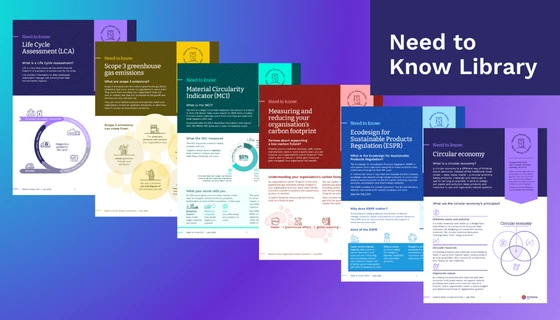
Need to Know guides
These short, easy-to-understand guides contain everything you need to know about a variety of sustainability topics, written in plain English.
Emission factors update webinar replay
Learn what’s new in our latest version including an improved approach for commodity factors, updated figures and a revised methodology report.
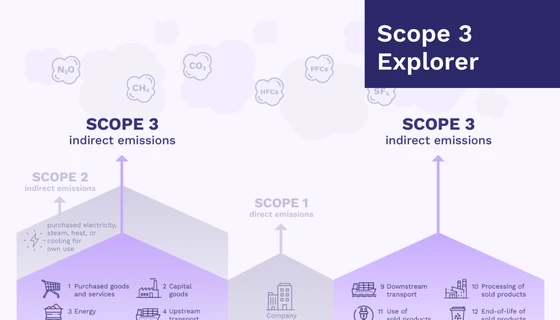
Scope 3 Explorer
If you’re wondering how to tackle your Scope 3 emissions, we can help you identify the emissions that are most relevant to your business.