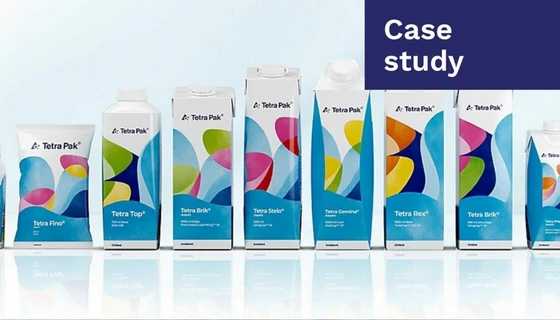
Packaging design and material choice can significantly influence environmental impacts. An updated life cycle assessment (LCA) we carried out for Tetra Pak across Australia and New Zealand shows that beverage cartons generally have a lower carbon footprint than many alternative packaging formats.
The new study shows that across all product categories and pack sizes assessed, cartons have the lowest carbon footprint of all beverage packaging options in Australia. In New Zealand, cartons have one of the lowest carbon footprint of all packaging options.
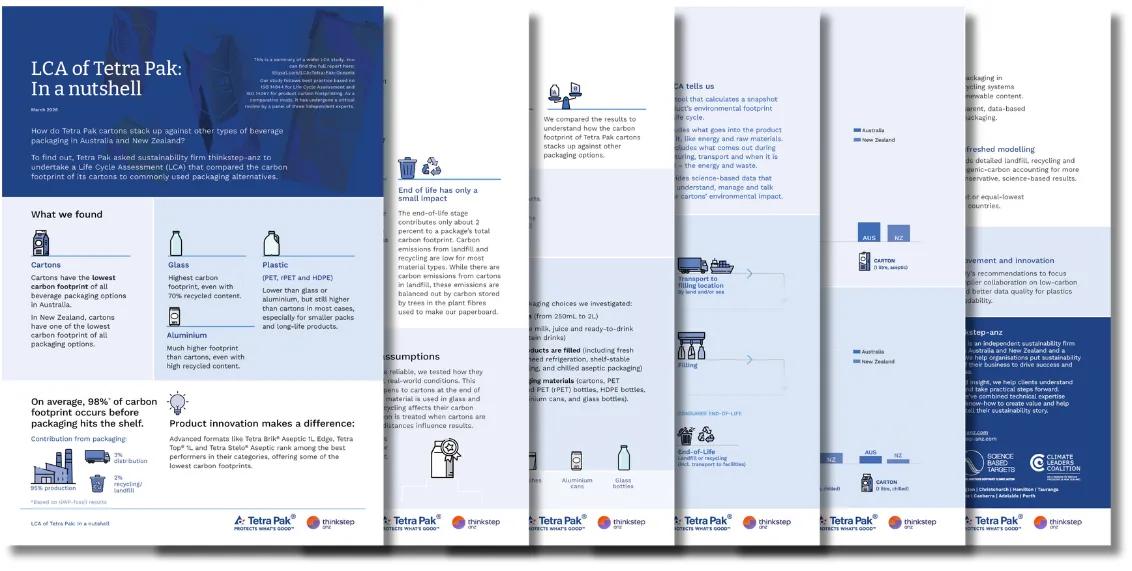
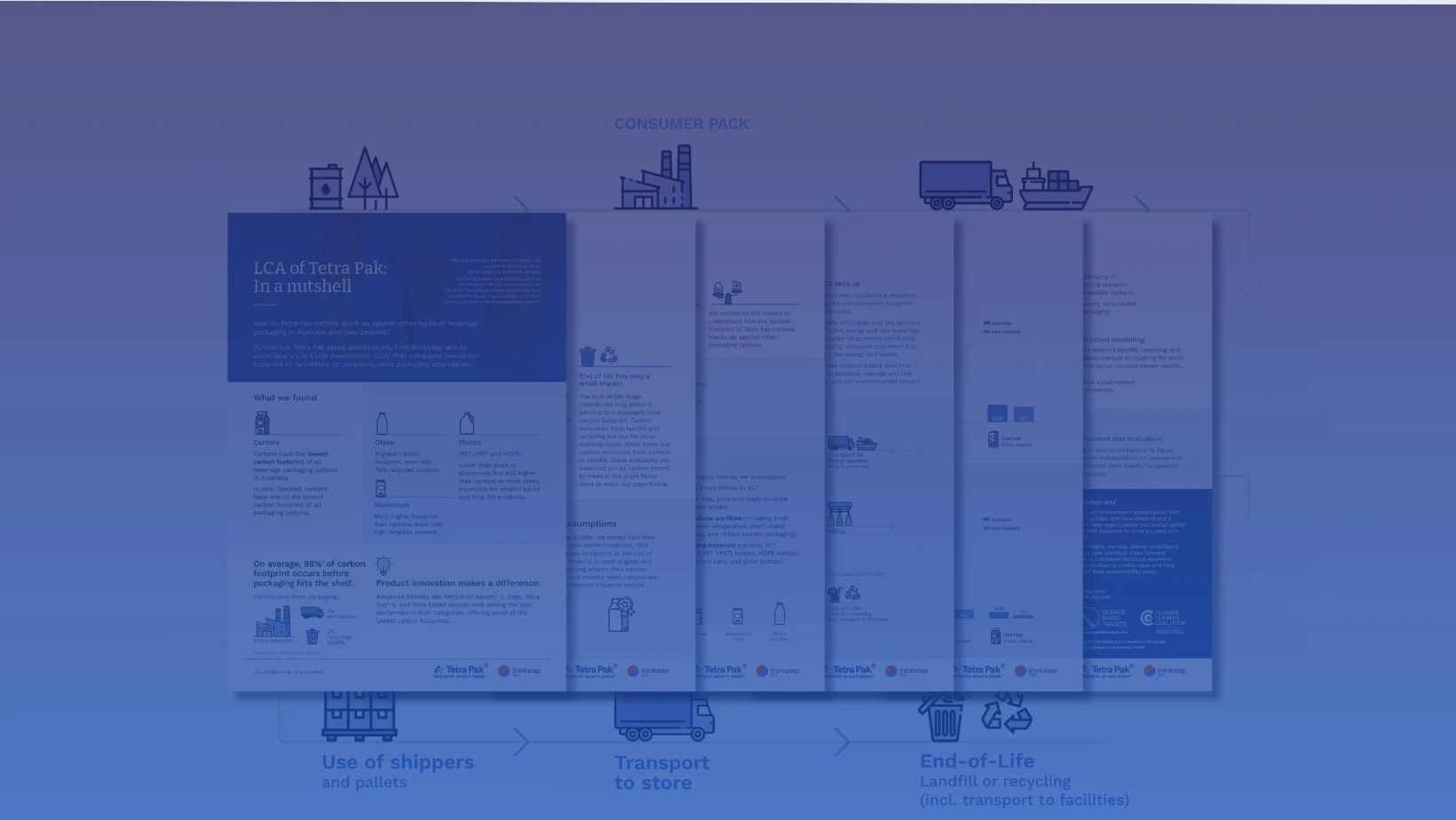
Tetra Pak's Nutshell report
We compared cartons with a range of commonly used packaging formats including PET and recycled PET bottles, HDPE bottles, aluminium cans, glass bottles and pouches.
Using a life cycle approach, we evaluated impacts from raw material production and packaging manufacture through to filling, transport and end-of-life management.
By providing robust, peer-reviewed data, the LCA helps organisations understand the environmental implications of packaging choices and supports more informed decisions across the packaging value chain.
Read our “nutshell” report, that summarises the relevant findings and assumptions in plain English supported with easy-to-understand infographics and a link to the full report for those who want to explore the underlying data.