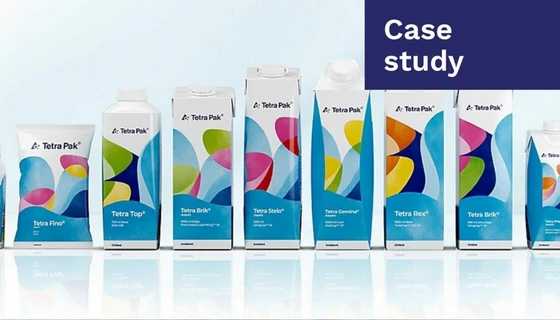
Fast-changing market demands and new regulations mean you need current data to stay ahead. That’s why Tetra Pak have refreshed their comparative Life Cycle Assessment (LCA) in 2026. They use the new data to show their cartons’ carbon footprint compared to other major packaging types in Australia and New Zealand. You can read the Tetra Pak case study here.
In this webinar, Sharon Tan, Marketing Manager at Tetra Pak Oceania and Jeff Vickers, Technical Director at thinkstep-anz, discuss how Tetra Pak is using its latest LCA to future-proof its customers' business and strengthen their strategy in Oceania.
Watch the replay below or scroll for a quick recap of the key takeaways:
Here is what we’ve learned
The LCA helps Tetra Pak identify where action matters most
The findings show that most impact happens upstream, which helps focus effort on raw materials, packaging production and filling rather than only on end of life.
The results point to practical improvement levers
Tetra Pak can use the study to identify hotspots and guide decisions on material choices, lightweighting, recycled or bio-based content and transport efficiency.
Verified data helps turn results into credible claims
Sharon emphasised that robust LCA data gives Tetra Pak and its customers stronger proof points for brand trust and environmental communication.
The findings help future-proof the business
The LCA gives Tetra Pak a more proactive way to respond to changing regulation and compliance expectations in Australia and New Zealand.
The study supports stronger customer and retailer conversations
Sharon positioned the LCA as a tool to show progress, improve accountability and support retailer sustainability requirements and preferred-supplier relationships.
Sharon and Jeff didn’t have time to answer all questions during the webinar, so we’ve captured the outstanding ones below, along with their answers:
Q: Are the results specific to Tetra Pak or can they be generalized to all cartons?
Sharon: The results are specific to Tetra Pak formats assessed in the study. But the broader insight is that of material production dominates climate impact and cartons perform very well relative to alternatives in Australia and New Zealand is consistent with multiple peer-reviewed LCAs globally
Q: Is this a cradle-to-grave LCA, or does it exclude parts of the lifecycle?
Sharon: It is a full cradle-to-grave assessment, covering raw materials extraction, packaging material production, conversion, transport, forming and filling, distribution and end-of-life treatment. This allows Tetra Pak to identify environmental hotspots rather than focusing on a single stage.
Q: Does improving sustainability also reduce costs?
Sharon: Often yes, actions like material reduction, energy efficiency and logistics optimisation frequently reduce both environmental impact and cost-to-serve.