Driving circularity through procurement

Circular Procurement in Action: Insights from the BBP Webinar

The property sector is embracing circular procurement as a powerful lever to reduce environmental impact, drive innovation, and strengthen supply chains. This was the clear message from the recent Better Buildings Partnership (BBP) webinar, which marked the launch of the new Circular Procurement Best Practice Guideline.

Hosted by Nicole Sullivan (thinkstep-anz), the session featured expert insights from Jim Goddin (thinkstep-anz), Simon Ng (Colliers), Harriet Smith (Green Building Council of Australia), and Melinda Mandla (JLL). The speakers shared guidance, case studies, and practical steps to help organisations embed circular principles into their procurement processes.

Watch the webinar replay or scroll down for key takeaways:

Key Takeaways:

  • Simon Ng highlighted the BBP's decade-long leadership in sustainability and the urgency of addressing scope 3 emissions. He introduced the guideline as a practical tool developed by industry, for industry.
  • Jim Goddin explained the guideline’s focus on fit-outs, operations, maintenance, and repair. He walked through its structure, including the 10 R framework, step-by-step guidance, and checklists to support implementation. The guideline encourages organisations to set circular goals, engage internal teams, collaborate with suppliers, and measure outcomes.
  • Harriet Smith showcased the GBCA’s Practical Guide to Circular Procurement, which complements the BBP resource by focusing on new buildings and major refurbishments. It outlines circular strategies across the building lifecycle and provides sample contract language to support delivery.
  • Melinda Mandla presented JLL’s sustainable procurement guide for their Sydney office, developed to support Green Star certification and global ESG commitments. She emphasised the value of using clear, accessible language and involving all teams in the process.

Panel Discussion:

Speakers shared practical insights into challenges and opportunities, from supplier engagement and measuring social benefits to aligning circular goals with business strategy. All agreed on the importance of collaboration, patience, and continuous improvement. Audience questions ranged from product versus service procurement to quantifying financial benefits and managing documentation. You can find some of answers to the most frequently asked ones further down at this website.

Recommended Actions:

The webinar made it clear: circular procurement is no longer a niche topic. It is a practical, scalable approach to creating long-term value in the built environment.


Extra Q&A's

Q: Do you have baseline best practices that organisations can benchmark themselves against?

A: Every business will be different and the appropriate benchmarks need to be defined in the context of the business, aligning with the guidance in ISO 59010.

Q:  Do you have actual business cases with quantifiable benefits achieved from before and after adopting Circular Procurement Practices -- and timeframe.

A: The guideline provides several examples of best practices that have been implemented by businesses and we encourage organisations and teams to adopt a continuous improvement mindset.

Q:  How far down the supply chain (e.g. supplier's supplier's suppliers) have organisations taken Circular Procurement Lifecycle down?

A: Supply chains can be highly opaque and gaining visibility can take time and collaboration, we have seen how persistence can pay off, however.

Q:  What pushback are Circular Procurement teams facing from within their own stakeholders / business functions, AND from suppliers?

A: The biggest pushback tends to come when stakeholders see circularity as an additional requirement, if correctly aligned with business priorities circularity should be an enabler for the priorities they already have.

Q: How do we get industry to start taking note of the designs and specifications with products like plasterboard, steel studs, mdf which are highly used currently and cannot be recycled right now?

A: Products don't have to be recyclable to be circular, there are other equally important strategies such as durability, reuse and bio-based solutions. These need to be seen holistically and circularity metrics like the Material Circularity Indicator (MCI) provide a common framework for comparing these different types of circularity. The focus should be on how circularity delivers business priorities (economic, environmental and social).

Q: There is always an argument that sustainable products are more expensive and so not realistic for the business to purchase. What are your thoughts on this?

A: Sustainable products can be more expensive, partly because the supply chain is less mature and less well developed. It's important though to assess solutions on their whole-life costs, not just their up-front costs and to include hidden costs such as waste disposal liabilities, the cost of future upgrades, etc. When considered holistically, the cost of more sustainable circular solutions can often be the same or less than linear alternatives.


Q: What are the best ways to find sustainable inputs right now?

A: It's important to be aware of green claims and to look for well-evidenced, third-party data to support selection. The guideline provides an approach that will support you in doing this. One important way to find more sustainable inputs is to create a clear market pull in your procurement processes, leaving space for suppliers to fulfil your requirements through alternative or non-traditional means that align better with the circular economy and sustainability objectives of your organisation. Collaboration with these suppliers helps support them to change the way they provide goods and services and benefits not just your business but others as well.

1109_Nicole-Sullivan-v2.png

Talk to our experts

As Impact Director at thinkstep-anz, Nicole supports organisations to improve their sustainability and create value at the same time. She is a recognised thought leader and speaker, known for her warm communication style and drive to inspire change. She works with government agencies, businesses and industry groups to shape sustainability strategies, reduce impacts and engage effectively with stakeholders. She brings deep experience in manufacturing and green buildings, offering practical insights with a strong strategic focus.

1012_James_Goddin.png

Jim Goddin is our Head of Circular Economy, and specialises in circular economy systems design. He has worked alongside the Ellen MacArthur Foundation for much of the past decade leading and co-authoring the widely adopted Material Circularity Indicator methodology. He has also worked extensively on the development of eco-design tools and the assessment of business risks resulting from critical materials and hazardous substances legislation.

Get in touch

You might also be interested in

Circular procurement: making it work in the real world

We’re proud to have worked with the Better Buildings Partnership (BBP) to develop their new Circular Procurement Best Practice Guideline, a practical resource to help procurement teams take action on circular economy principles. 

What you Need to Know about responsible procurement

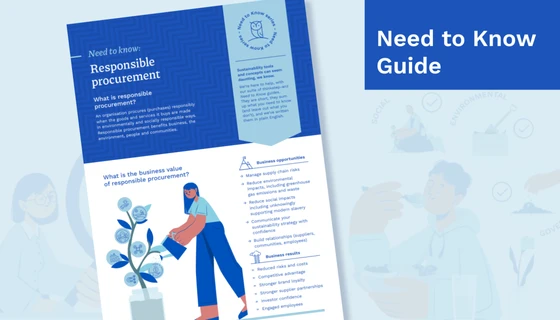
An organisation procures (purchases) responsibly when the goods and services it buys are made in environmentally and socially responsible ways. Check out our Need to Know guide on responsible procurement. 

Responsible procurement service

Put your organisation’s sustainability values into practice – through your supply chain. Our practical tools and processes build on your current procurement system to make your purchasing more sustainable.