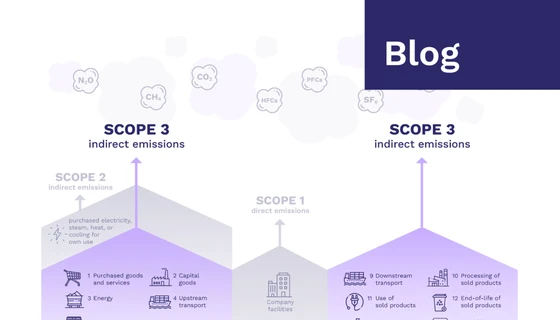
Tracking scope 3 emissions, the indirect emissions in your value chain, isn’t always easy.
It can be tricky when you don’t have direct data, like the carbon footprint of your suppliers. But don’t worry, you can still create a reliable emissions profile using secondary data. Here’s how.

Why primary data is preferred
The best way to calculate your scope 3 emissions is by using data from direct sources, such as meter readings or supplier reports. This gives the most accurate picture of your business’s footprint. However, in many cases, businesses struggle to get this level of detail. This might be due to missing data, supplier limitations or simply the complexity of global supply chains.
No primary data? Secondary data can still get you there.
If you don’t have access to primary data, you can use secondary data. The key is to be transparent: clearly explain your data sources, document any assumptions and aim to improve data quality over time.
Using secondary data effectively
Secondary data comes from recognised sources such as:
- industry databases
- government statistics
- academic research
- industry averages
- assumptions based on expert knowledge.
While secondary data isn’t as precise as primary data, it still provides a reliable way to estimate emissions. The most important step is to document everything: keep notes on assumptions, reference sources and save relevant email discussions to ensure consistency and transparency.
Flexible reporting options for scope 3
The Greenhouse Gas (GHG) Protocol allows different methods for reporting emissions in certain categories, like purchased goods and services (category 1). These include:
- Supplier-specific method – Uses data directly from suppliers
- Average-data method – Uses industry-wide average emission factors
- Spend-based method – Estimates emissions based on the amount spent on goods and services
______
How emission factors help bridge data gaps
We’ve developed emission factors specifically for New Zealand organisations. These factors link your spending to greenhouse gas emissions across different sectors, making it easy to estimate your carbon footprint using the financial data you already have. They’re especially useful when primary data isn’t available, helping you report more accurately and in a way that reflects New Zealand’s unique context. Learn more about our Emission Factors for New Zealand.
Expect data quality to improve over time
It’s okay if your scope 3 calculations in your first year rely heavily on secondary data and assumptions. Many businesses start this way. As you refine your approach, build stronger relationships with suppliers and collect better data, your emissions reporting will become more accurate. This step also helps you to identify the biggest sources of emissions. Prioritise these areas and improve the quality of data where it matters most.

Need help with your scope 3 reporting?
At thinkstep-anz, we specialise in helping businesses navigate emissions reporting. Whether you need guidance on data collection, emission factors, or refining your scope 3 approach, we’re here to help.
Reach out to start your journey towards clearer, more actionable emissions insights!