
Scope 3: Category 8 – Upstream leased assets
What is included, how to calculate emissions, common challenges and solutions, where to find data and practical ways to reduce them.
This guide explains scope 3, category 8 - upstream leased assets. It covers what to include, how to calculate emissions, where to find data, common challenges and practical ways to reduce emissions.
Upstream Leased Assets at a glance:
- Greenhouse Gas Protocol: Category 8 - Upstream Leased Assets
ISO 14064-1:2019: Category 6 - Indirect GHG emissions from other sources - Covers leased buildings, vehicles and equipment used by your organisation
- Relevant where leased assets are not included in Scope 1 or Scope 2
- Only applies to leased assets, not assets you own
See all 15 scope 3 categories
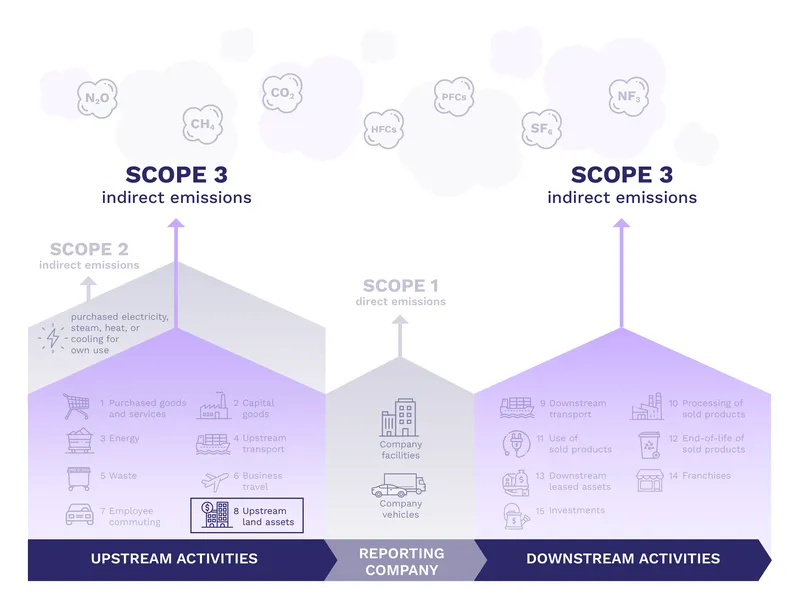
What is included?
The Greenhouse Gas Protocol defines this category as emissions from operating assets your organisation leases that are not already included in your Scope 1 or Scope 2 inventories. This category is only relevant to companies that operate leased assets (i.e., lessees). For companies that own and lease assets to others (i.e., lessors), see category 13 (Downstream leased assets).
Examples:
- Leased office buildings
- Leased vehicles
How can I calculate emissions from leased assets?
Asset-specific method
Collect data about the fuel and energy used or scope 1 and scope 2 emissions data from individual leased assets
Lessor-specific method
Collect the scope 1 and scope 2 emissions from lessor(s) and allocate emissions to the relevant leased asset(s)
Average data method
Estimate emissions for each leased asset, or group of leased assets, based on average data, such as average emissions per asset type or floor space.
What are the challenges?
Data may be hard to find if you are leasing part of an asset (e.g. only one floor in a building).
Where should I start?
Look at data for your leased assets and consider alternatives that produce fewer emissions.
Last updated July 2026
Previous or next category
Talk with a Scope 3 expert

Nicky Andrews is a corporate sustainability expert with a focus on carbon reporting and climate. She helps clients to understand and manage their carbon impact across the whole value chain. This includes preparing carbon footprints, setting emissions reduction targets, and identifying lower carbon alternatives.
You may also be interested in

Scope 3 Need to Know
Our Need to Know guides give you short summaries of sustainability topics in an easy to share PDF. Learn the basics of Scope 3 emissions.
Our Scope 3 Explorer
Our free online assessment can show which Scope 3 categories are most relevant to your business.

Our Scope 3 services
If you're ready to take action on your Scope 3 emissions, we're ready to work with you to make real changes.