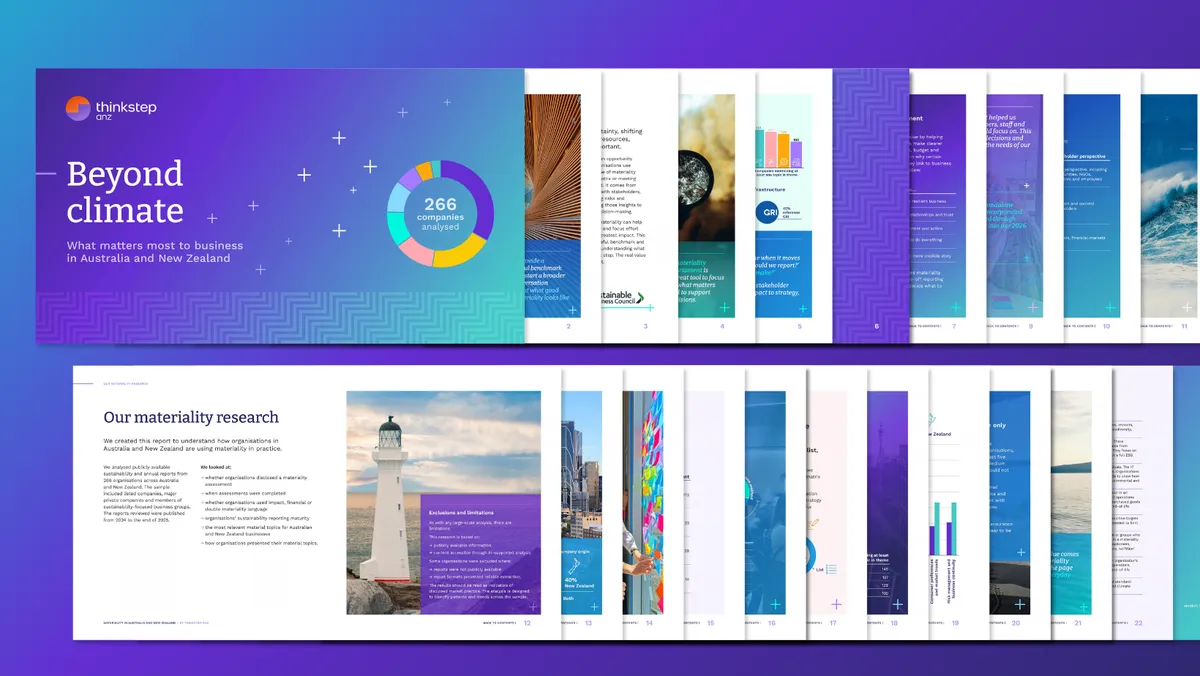

Beyond climate – what matters most to business in Australia and New Zealand
September 2026
How does your organisation's approach compare?
Materiality assessments can help organisations focus their sustainability work, understand stakeholder expectations and make better decisions.
Our new report Materiality in Australia and New Zealand examines public reporting from 266 organisations. It shows how they are approaching materiality, which topics they identify most often and where practice can become more credible and useful.
Materiality should do more than produce a list
Materiality is often treated as a reporting exercise. Its greater value comes from helping an organisation decide where to focus its effort, budget and attention.
A strong materiality assessment brings together stakeholder perspectives, business risks, impacts and opportunities. It can help leaders set clearer priorities, strengthen relationships and connect sustainability with strategy.
Materiality creates the most value when it moves an organisation from “What should we report?” to “What decisions should we make?
“Materiality should not be a document refreshed every few years. It should become part of how organisations navigate change, build resilience and make better long-term decisions.”
Andrew Petersen - CEO Business Council for Sustainable Development Australia
What 266 organisations reveal about materiality
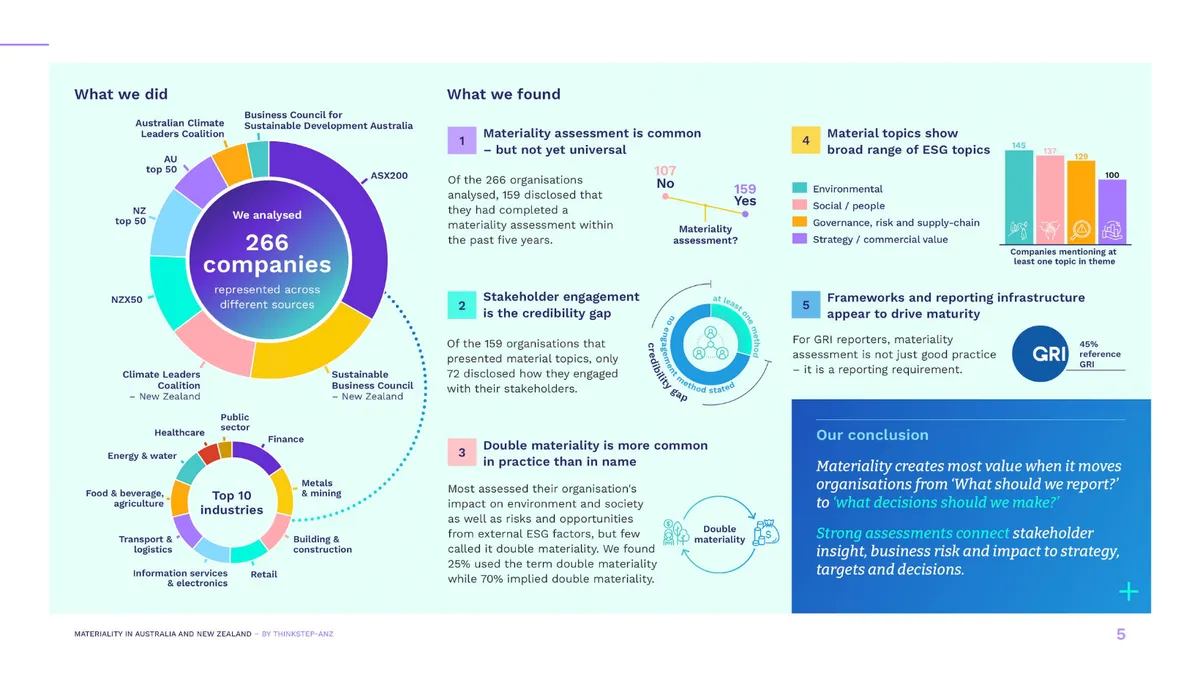
Our research found that materiality assessments are well established, particularly among larger organisations and organisations with more developed reporting systems. However, disclosed practice remains uneven.
Materiality assessments are common, but not universal
Of the 266 organisations analysed, 159 disclosed that they had completed a materiality assessment within the past five years.
Stakeholder engagement is the credibility gap
Many organisations identify material topics without clearly explaining who they engaged, how they gathered input or how they set their priorities. Clearer disclosure would make the process easier for readers to understand and trust.
Double materiality is more common in practice than in name
Most organisations with a recent assessment showed evidence of considering both their impacts on people and the environment and the sustainability-related risks or opportunities facing their business. Far fewer explicitly used the term “double materiality”.
People and climate topics lead the list
Health, safety and wellbeing was the most common material topic, followed by climate-related business risk, workforce capability and community engagement.
“For business leaders, materiality can help cut through complexity and focus effort where it will have the greatest impact.”
Mike Burrell - CEO Sustainable Business Council and Climate Leaders Coalition Chief Executive
What you will find in the report
Download the report to explore:
- how widely materiality assessments are disclosed across the sample
- how organisations engage stakeholders and present their material topics
- how organisations are applying impact, financial and double materiality perspectives
- the most common material topics across Australia and New Zealand
- where Australian and New Zealand source lists show different areas of emphasis
- how organisation size, reporting frameworks and reporting infrastructure are associated with disclosed materiality practice
- how materiality can support strategy, risk management and decision-making.
See here what the press have written about our report:
BusinessDesk, Greg Hurrell: NZ businesses are getting a crash course in geopolitical chaos
The Fifth Estate: On what's keeping us awake at night
About the research
thinkstep-anz reviewed publicly available sustainability and annual reports from 266 organisations across Australia and New Zealand. The reports were published from 2024 to the end of 2025.
The sample included listed organisations, major private organisations and members of sustainability-focused business groups. AI-supported analysis helped extract information at scale, followed by expert review to refine the findings and identify patterns.
The results reflect publicly disclosed practice within the sample. They should not be read as an audit of each organisation or as representative of every organisation in Australia and New Zealand.
Need support?
Thinking about your materiality assessment?
We deliver structured materiality and double materiality assessments that identify and prioritise the ESG issues that matter most to your business and stakeholders. Our work supports strategy, reporting, and compliance with frameworks such as GRI, ISSB, B Corp and CSRD.
Reach out to have a chat with our client engagement team to see how we can help you focus on what matters.
You might also be interested in...
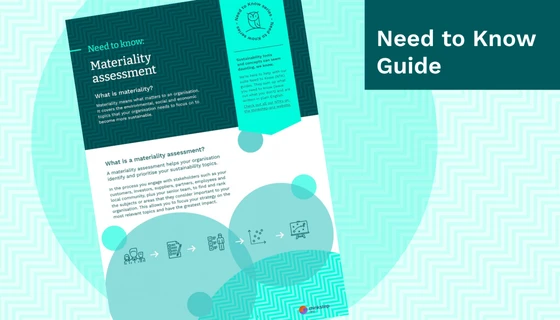
Materiality assessment Need to Know guide
Our Need to Know guides are short, summarise what you need to know (and leave out what you don’t), and we’ve written them in plain English. Find out more about Materiality assessments.

Materiality assessment
We deliver structured materiality and double materiality assessments that identify and prioritise the ESG issues that matter most to your business and stakeholders.

Why double materiality matters
Discover why dynamic double materiality is key to understanding both how sustainability issues impact your organisation and how your organisation impacts the world around it.