LCA is not new. Neither are the rules.
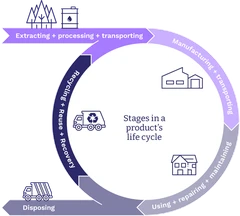
Life cycle assessment (LCA) did not begin with carbon footprints or environmental product declarations (EPDs). Its foundations were laid decades ago, when researchers and businesses began looking beyond individual environmental impacts to understand the trade-offs across a product’s full life cycle.
In this webinar, thinkstep-anz CEO Barbara Nebel interviews Chris Koffler, Technical Director LCA at thinkstep-anz, and international LCA leader and SETAC Fellow Jim Fava. Chris and Jim are both recipients of the American Center for Life Cycle Assessment’s Lifetime Achievement Award. Jim actually coined the term life cycle assessment!
Together, they explore how LCA began, why shared standards were needed and how decades of debate shaped the framework used today. They also discuss what makes LCA useful, where its standards could evolve and why experienced judgement still matters as artificial intelligence (AI) becomes more widely used.
Watch the webinar replay here or read on for six key takeaways.
Six key takeaways
LCA began by revealing trade-offs
One of the earliest life cycle studies compared different types of beverage packaging. It did not produce one clear environmental winner. Instead, it showed that each material had different advantages and impacts across its life cycle.
A shared method helped build trust
Early studies used different approaches and often produced results that could not be compared. Bringing industry, government and academia together created a common framework that people could understand, apply and trust.
LCA was designed to support improvement
Modern LCA has four phases: goal and scope definition, inventory analysis, impact assessment and interpretation. Improvement was central to the original framework. The purpose was never simply to produce numbers, but to use them to make things better.
The standards set guardrails, not one fixed recipe
The LCA standards have stood the test of time because they define a credible process without prescribing one method or dataset for every study. The approach can be adapted to the purpose of the study while remaining within the standards.
It is life cycle assessment, not life cycle analysis.
The distinction matters. LCA is not simply about calculating and analysing environmental data. A critical part of the process is assessing potential environmental impacts, interpreting the results, and identifying opportunities for improvement.
That is why the ‘A’ stands for assessment, not analysis.
Good LCA still depends on people
LCA can identify environmental hot spots, but data alone does not make a decision. Practitioners need to communicate results in a way decision-makers can use and consider factors such as cost, quality, risk and brand. AI may speed up parts of an LCA, but transparent methods, reliable data and experienced judgement remain essential.