Come for the condoms and coffins. Stay for the system boundaries. Plenty of stories that put ‘common sense’ to the test.
Three life cycle assessment (LCA) practitioners walked into a webinar with about 60 years of combined experience. They left the PowerPoint deck behind.
The result? Condoms, coffins, Christmas trees, banknotes and a very literal appreciation of ‘cradle to grave’.
In this relaxed conversation, thinkstep-anz’s Barbara Nebel, Chris Koffler and Jeff Vickers compare unusual projects, challenge popular sustainability assumptions and share lessons that only come from doing this work again and again.
Watch the webinar replay:
Five key takeaways
1. You really can assess almost anything
Jeff’s early quality-assurance work included LCAs of condoms and coffins. Chris has assessed Christmas trees and banknotes. Beyond providing excellent webinar material, these projects show that LCA can compare options and find hot spots across almost any product or system.
2. A plausible story is not the same as evidence
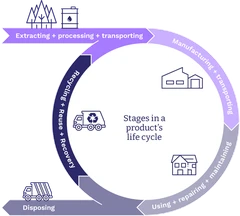
A wind farm can look carbon- and energy-intensive before it starts generating electricity. Yet two projects paid back the energy used to build them in just six and nine months. Recycled paper can also have a higher environmental footprint than virgin paper when the energy systems behind production differ. The lesson is not that recycling is bad. It is that the whole system matters.
3. Context can flip the result
Reusable food packaging performed well in a European study but not in a North American one because longer transport distances changed the equation. Electric vehicle results also depend on manufacturing data, process efficiency and the electricity grid. Location, logistics and technology are not footnotes. They can decide the outcome.
4. Sometimes the process is the unexpected benefit
One company found that mapping its supply chain for an LCA also helped with its modern slavery statement. Product LCA data can support corporate carbon accounting, too. Sometimes the number is useful – sometimes the work required to reach it reveals just as much.
5. Carbon is one chapter, not the whole book
Carbon often starts the conversation, but it cannot answer every environmental question. Water, land use, resources and other impacts may point in different directions. LCA makes those trade-offs visible so decision-makers can weigh them openly.
A few practical answers from the Q&A
1. Start broad, then follow the hot spots
For an office-based business, a spend-based screening can quickly show where emissions are concentrated. Travel, technology and purchased services are sensible places to check, but the data should decide where the effort goes.
2. Expect spreadsheets and details
For people considering a career in LCA, curiosity helps. So does being comfortable with large spreadsheets, imperfect data and several rounds of questions. Introductory resources, practical projects and postgraduate study can all build the foundations.
3. Be careful with ‘environmentally better’
A lower carbon footprint does not automatically mean better results across all impacts. Look for the indicators that tell a different story, then make the trade-offs clear.