
Scope 3: Category 10 – Processing of sold products
What is included, how to calculate emissions, common challenges and solutions, where to find data and practical ways to reduce them.
This guide explains scope 3, category 10 - processing of sold products. It covers what to include, how to calculate emissions, where to find data, common challenges and practical ways to reduce emissions.
Processing of Sold Goods at a glance:
- Greenhouse Gas Protocol: Category 10 - Processing of Sold Products
- ISO 14064-1:2019: Category 5 - Indirect GHG emissions associated with the use of products from an organisation
- Covers emissions from processing products before they reach the end customer
- Relevant when your products require further processing
- Only applies to intermediate products, not finished products
See all 15 scope 3 categories
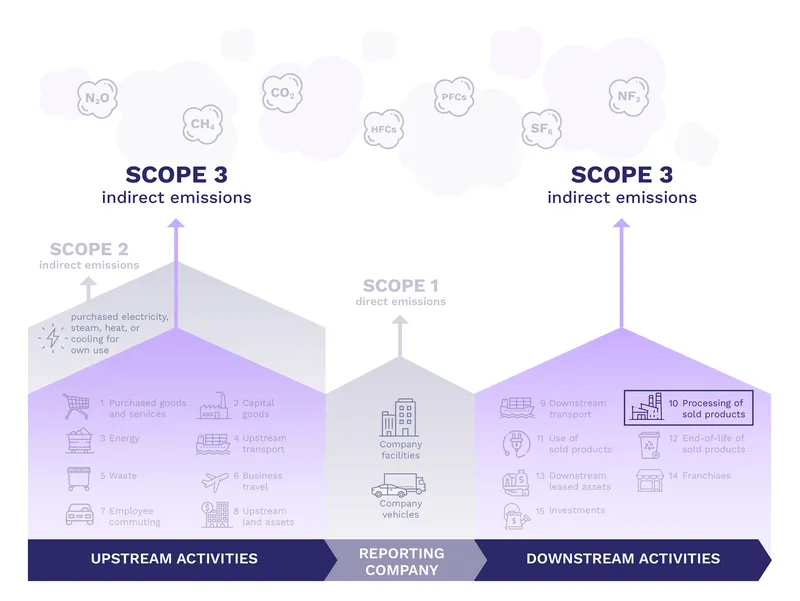
What is included?
The Greenhouse Gas Protocol defines this category as emissions from processing intermediate products by third parties (e.g., manufacturers) that your organisation has sold.
Intermediate products are those that need more processing or need to be included in another product before an end consumer can use them.
Examples:
- Manufacturing T-shirts from textile fabric
- Processing plastic resin into plastic bottles
- Producing confectionery using an intermediate product like sugar
Who is this scope 3 category most relevant to?
Manufacturers of intermediate products
How can I calculate emissions processing sold goods?
Site-specific method
Calculate the amount of fuel and electricity used and the amount of waste generated from processing intermediate products your organisation has sold to a third party. Then apply the appropriate emission factors.
Average-data method
Estimate emissions for processing intermediate products your organisation has sold based on average secondary data, such as average emissions per process or per product.
What are the challenges?
Sometimes you don’t know the end use of the intermediate products you sell.
Where should I start?
Work with your clients to understand their processes. You might be able to identify changes you can make in how your products are provided that help your clients to reduce their emissions when processing your goods.
Last updated July 2026
Previous or next category
Talk with a Scope 3 expert

Nicky Andrews is a corporate sustainability expert with a focus on carbon reporting and climate. She helps clients to understand and manage their carbon impact across the whole value chain. This includes preparing carbon footprints, setting emissions reduction targets, and identifying lower carbon alternatives.
You may also be interested in
Scope 3 Need to Know
Our Need to Know guides give you short summaries of sustainability topics in an easy to share PDF. Learn the basics of Scope 3 emissions.
Our Scope 3 Explorer
Our free online assessment can show which Scope 3 categories are most relevant to your business.
Our Scope 3 services
If you're ready to take action on your Scope 3 emissions, we're ready to work with you to make real changes.