
Scope 3: Category 5 – Waste generated in operations
What is included, how to calculate emissions, common challenges and solutions, where to find data and practical ways to reduce them.
Waste Generated in Operations at a glance:
- Greenhouse Gas Protocol: Category 5 - Waste Generated in Operations
- ISO 14064-1:2019: Category 6 - Indirect GHG emissions from other sources
- Covers the treatment and disposal of waste generated by your organisation
- Relevant to almost every organisation
- Includes landfill, recycling, composting and waste-to-energy
See all 15 Categories
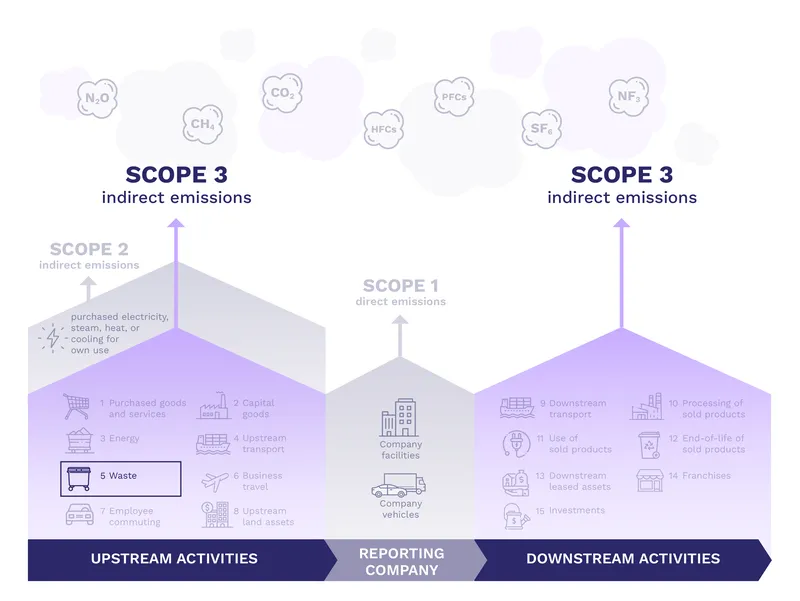
What is included?
The Greenhouse Gas Protocol defines this category as disposal and treatment of waste generated in your organisation’s operations in the reporting year in facilities not owned or controlled by you.
Emissions in this category can stem from:
- Disposal in a landfill
- Recovery for recycling
- Incineration
- Composting
- Wastewater treatment
Who is this scope 3 category most relevant to?
For most organisations, this is a very small category in their overall scope 3 emissions.
How can I calculate emissions from waste generated in operations?
Different types of waste, generate different types of greenhouse gases.
- CO2: from degrading fossil and biogenic carbon contained in waste
- CH4: mainly from decomposing biogenic materials in landfill or waste-to-energy (WTE) technologies
- HFCs: from disposing of fridges, freezers and air conditioning units
You can use these methods to calculate emissions from waste generated in your operations when the waste is managed by third parties:
- Supplier-specific method
This involves collecting waste-specific scope 1 and scope 2 emissions data directly from waste treatment companies (e.g., for incineration, recovery for recycling) - Waste-type-specific method
This involves using emission factors for specific waste types and waste treatment methods - Average-data method
This involves estimating emissions based on total waste going to each disposal method (e.g., landfill) and average emission factors for each disposal method
What are the challenges?
- Getting accurate data on the weight of your waste. It’s best to have it in kilogrammes or tonnes, not the number of bins emptied.
- You may share building space where waste is collected for an entire building and you only contribute a percentage.
- You may need to deal with more than one waste provider, particularly if you are separating waste streams for recovery and recycling.
- Waste includes wastewater which will likely be an estimated volume on your water bill.
Where should I start?
- Find out who collects your waste and talk to them about getting hold of waste data.
- Wherever possible obtain the weight of waste materials so you can calculate your emissions most accurately.
Last updated July 2026
Talk with a Scope 3 expert

Nicky Andrews is a corporate sustainability expert with a focus on carbon reporting and climate. She helps clients to understand and manage their carbon impact across the whole value chain. This includes preparing carbon footprints, setting emissions reduction targets, and identifying lower carbon alternatives.
You may also be interested in
Scope 3 Need to Know
Our Need to Know guides give you short summaries of sustainability topics in an easy to share PDF. Learn the basics of Scope 3 emissions.
Our Scope 3 Explorer
Our free online assessment can show which Scope 3 categories are most relevant to your business.
Our Scope 3 services
If you're ready to take action on your Scope 3 emissions, we're ready to work with you to make real changes.