
Scope 3: Category 3 – Fuel and energy
What is included, how to calculate emissions, common challenges and solutions, where to find data and practical ways to reduce them.
Capital Goods at a glance:
- Greenhouse Gas Protocol: Category 3 - Fuel- and energy-related activities
- ISO 14064-1:2019: Category 6 - Indirect GHG emissions from other sources
- Covers upstream emissions from purchased fuels and energy
- Excludes emissions already reported in scope 1 and scope 2
- Usually material for energy-intensive organisations
See all 15 Categories
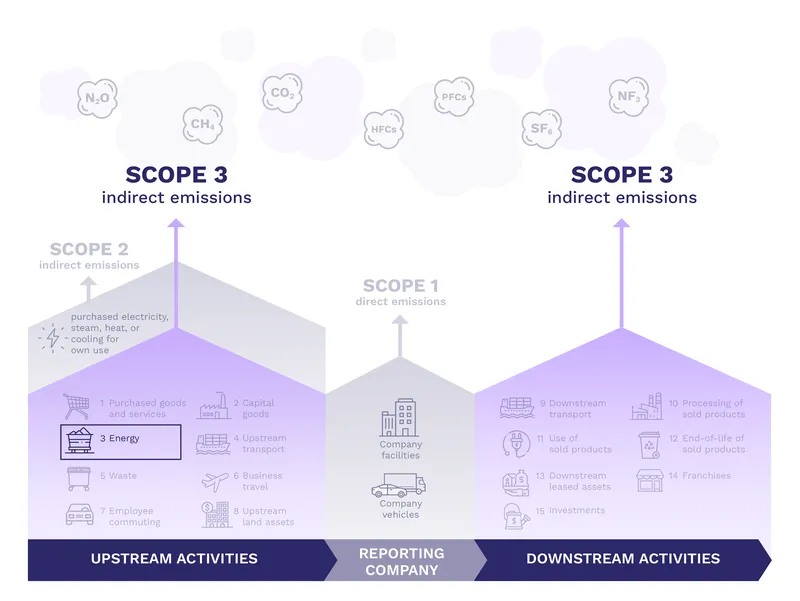
Didn't I already count these emissions in scope 1 or scope 2?
No. Scope 1 covers burning fuels in machinery, boilers or vehicles you own or control. Scope 2 covers generating the energy you purchase. Category 3 captures the emissions that occur before that fuel or energy reaches your organisation.
What is included?
This scope 3 category includes emissions from these four activities:
- Emissions from extracting, producing and transporting the fuel your organisation buys. Examples include mining coal, refining, petroleum, transmitting and distributing natural gas, producing biofuels, etc.
- Emissions from extracting, producing and transporting the fuel your organisation buys to generate electricity, steam, heating and cooling. Examples include mining coal, refining fuels, extracting natural gas, etc.
- Transmission and distribution losses
- Emissions from generating electricity that is bought by a utility company or energy retailer and sold to end users.
What is not included?
Category 3 does not include:
- Fuel burned in company vehicles (scope 1)
- Fuel burned in boilers you own (scope 1)
- Purchased electricity itself (scope 2)
- Renewable electricity generated on-site (Scope 1/2 depending on reporting)
Who is this scope 3 category most relevant to?
Organisations with high energy consumption often have material Category 3 emissions. This typically includes:
- Utilities
- Healthcare
- Manufacturing
- Data centres
- Food processing
- Large commercial buildings
Where can I find the data I need?
Primary, supplier-specific data sources include:
- Company-specific data on upstream emissions. For example, on mining coal or transmitting and distributing natural gas
- Grid-specific transmission and distribution loss rate
- Company-specific power purchase data and generator-specific emission rate for purchasing power
Secondary, estimated data sources include:
- National average data on upstream emissions (for example, from life cycle inventory databases)
- National average transmission and distribution loss rate
- National average power purchase data
Common challenges - and how to overcome them
| Challenge | Practical advice |
|---|---|
| Distribution losses | Use recognised national or grid-specific factors. Check with your lines company. |
| Limited supplier data | Start with published electricity and fuel factors |
| Reducing emissions outside of your control | Focus on reducing energy demand and switching to lower-carbon energy |
Five steps to get started
- Gather fuel and electricity consumption data
- Identify fuels already reported in scope 1 and scope 2
- Calculate upstream fuel and energy emissions
- Include transmission and distribution losses where applicable
- Identify opportunities to reduce energy demand
Tips to improve data quality and reduce emissions
- Improve energy efficiency
- Reduce electricity and fuel consumption
- Transition to renewable electricity where possible
- Replace fossil fuels with lower-carbon alternatives
- Generate renewable energy on-site
- Request supplier-specific energy data where available
Last updated July 2026
Need help with Category 3?

Nicky Andrews is a corporate sustainability expert with a focus on carbon reporting and climate. She helps clients to understand and manage their carbon impact across the whole value chain. This includes preparing carbon footprints, setting emissions reduction targets, and identifying lower carbon alternatives.
You may also be interested in
Scope 3 Need to Know
Our Need to Know guides give you short summaries of sustainability topics in an easy to share PDF. Learn the basics of Scope 3 emissions.
Our Scope 3 Explorer
Our free online assessment can show which Scope 3 categories are most relevant to your business.

Our Scope 3 services
If you're ready to take action on your Scope 3 emissions, we're ready to work with you to make real changes.