Life Cycle Assessment (LCA) Services
Understand the environmental impacts of your products and make better decisions with confidence.
thinkstep-anz has been conducting Life Cycle Assessments for more than 20 years and has completed hundreds of studies across Australia and New Zealand. Our certified practitioners help organisations identify environmental hotspots, support product development, substantiate environmental claims and provide the foundation for Environmental Product Declarations (EPDs).
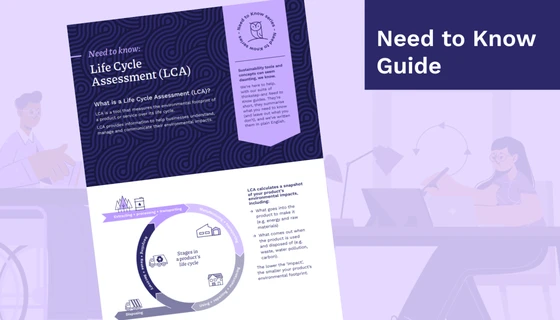
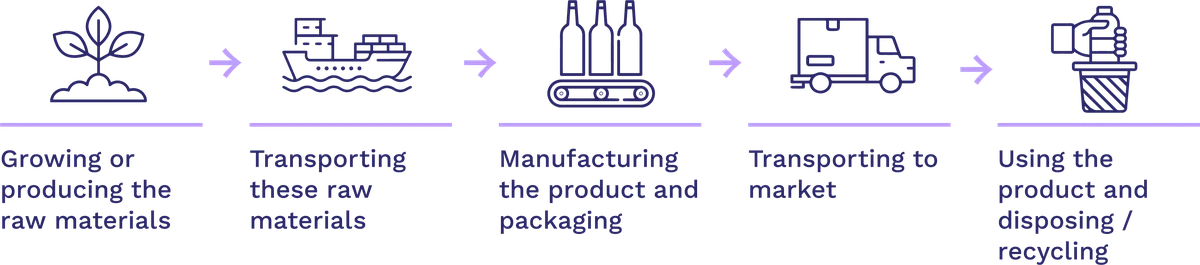
A Life Cycle Assessment (LCA) measures the environmental impacts of a product across its full life cycle.
Why choose thinkstep-anz for Life Cycle Assessment?
We are experts in translating complex results into practical business decisions.
- 1,000+ LCA studies delivered
- 20+ years of LCA experience across Australia and New Zealand
- Largest team of certified LCA practitioners in Australia and New Zealand
- LCA experience spanning construction, buildings, food, agriculture, packaging, manufacturing, energy, electronics, infrastructure and automotive
Our team includes recognised leaders who have helped shape the development and application of Life Cycle Assessment across Australia and New Zealand through leadership roles in LCANZ, contributions to ISO standards, participation in EPD International's Technical Advisory Group, industry best-practice development, and collaboration with leading research and industry organisations.
Why undertake a Life Cycle Assessment?

Product development and innovation
Identify environmental hotspots across the product life cycle and focus improvement efforts where they will have the greatest effect. Use LCA insights to support product innovation, material selection and design decisions.

EPD development
Every Environmental Product Declaration (EPD) is built on an LCA. If you may require an EPD in the future, undertaking a robust LCA can provide the foundation for verification and publication.

Substantiate environmental claims
Provide a science-based foundation for environmental communications and reduce greenwashing risks. Robust LCA data can support credible claims and improve confidence among customers, investors and regulators.

Advance circular economy goals
Assess the environmental benefits of recycled content, reuse, recycling and product redesign strategies. Understand trade-offs and avoid shifting impacts elsewhere in the value chain.

Meet customer & procurement requirements
Respond confidently to growing requests for credible environmental information from customers, regulators and procurement teams. Increasingly, LCAs support supplier questionnaires, tenders and sustainability disclosures.

Inform ESG reporting and strategy
Use product-level insights to support broader sustainability initiatives, including ESG reporting, climate disclosures, nature-related assessments and sustainability strategy development.
How we can help
Life Cycle Assessment (LCA)
Measure the environmental impacts of a product, service or system across its full life cycle compliant with ISO 14040 and 14044.
High-level screening LCA
As a first step, undertake a high level, screening or 'back of the envelope' LCA to rapidly identify priorities for further investigation.
Comparative LCAs
Comparative LCAs evaluate the environmental performance of alternative products or design options. Generate evidence for decision-making and external communication.
Critical and independent reviews
Independent reviews provide assurance that your LCA meets relevant international standards. Strengthen the credibility of your studies with experienced reviewers and recognised technical expertise.
Build capacity
We believe knowledge should be shared. Through training, coaching, collaboration and hands-on project delivery, we help build your own LCA capability.
Turn LCA insights into ESG action
Translate LCA results into ESG strategy, reporting, risk management, product innovation, and measurable sustainability outcomes.
The LCA process
We manage the process from initial scoping through to discussion of results:
- define scope
- provide guidance for efficient data collection using our proprietary data collection process
- calculate the results
- discuss results with you
- prepare the LCA report
- create an executive summary in plain English, including an infographic of the results



Our approach
We focus on what matters most. Our studies are designed to provide cost effective and robust results while balancing project objectives, timelines and budgets.

Standards and best practice
Our work aligns with internationally recognised standards and methodologies, including:
- ISO 14040 and 14044
- ISO 14046
- ISO 14067
- ISO 14071
- EN 15804
- ISO 21930
- ISO 14025
- PEF (for Europe)

Industry-leading data
High-quality data is essential for robust LCAs. We use leading international databases and understand their appropriate application:
- Our proprietory Ecotegral Database, covering already more than 250,000 datasets
- Sphera LCA Content (formerly GaBi)
- ecoinvent
- Agri-footprint
- AusLCI (Australian Life Cycle Inventory Database)
- USLCI (U.S. Life Cycle Inventory Database)
- BAFU 2025

Independent software expertise
Our team works across all leading LCA software platforms, allowing us to select the right tool for each project and client requirement:
- Our proprietary LCA tool
- Sphera LCA for Experts (formerly the GaBi software)
- SimaPro
- openLCA
- eTool
- EC3 by Building Transparency
- GCCA EPD Tool
Turning insights into action
Life Cycle Assessment provides the foundation for many sustainability initiatives. The results can be used to support Scope 3 reporting, assess circularity, inform product development, strengthen sustainability claims and meet procurement or certification requirements.
Use your LCA work to support your:
- Circular economy strategy
- Material Circularity Indicator
- Scope 3 reporting
- Support your environmental claims
- Communicate your results
This is just the start - talk to our team to explore your next steps.
Beyond traditional LCA
Many organisations use LCA to support product sustainability and EPD development.
Increasingly, LCA data is also being used to inform broader sustainability frameworks, including circular economy, nature-related risk assessments, TNFD reporting and Planetary Boundary Accounting.
At thinkstep-anz, we help organisations connect product-level environmental data with wider sustainability strategies and reporting frameworks.
Talk with our LCA experts

Chris Koffler is our Technical Director LCA and one of Australasia's most experienced Life Cycle Assessment (LCA) practitioners. With more than 20 years of experience, he has contributed to over 500 LCA, Environmental Product Declaration (EPD) and carbon footprint projects. Chris also co-chaired the American Center for Life Cycle Assessment’s (ACLCA) Technical Committee for many years, receiving ACLCA’s Lifetime Leadership Award for this work. He has taught LCA at Yale University and contributed to the development of ISO standards for LCA.

Emily Townsend is our Services Director, with over 20 years of sustainability experience and former President of the Life Cycle Association of New Zealand (LCANZ). With a degree in Chemistry from the University of Oxford, she combines scientific rigour with practical business insight. From construction materials supplied to the London 2012 Olympic Games to honey, telecommunications, and digital services, she has seen how robust environmental data drives better decisions.

Chanjief Chandrakumar is a Melbourne-based sustainability specialist with over 15 years of experience in climate change and life cycle assessment. A Certified LCA Practitioner, he has worked across most sectors. He presented at the G20’s Meeting of Agricultural Chief Scientists (MACS-G20). He has worked alongside leading organisations in Australia, Europe, and New Zealand, including the Global Research Alliance on Agricultural Greenhouse Gases, International Energy Agency, New Zealand Ministry for Primary Industries, ETH Zurich, University of Oxford, and University of Sydney.
Frequently asked questions
You may also be interested in
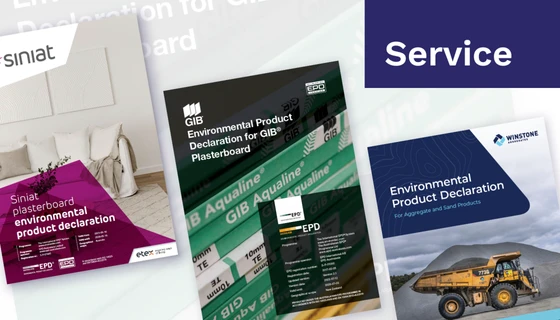
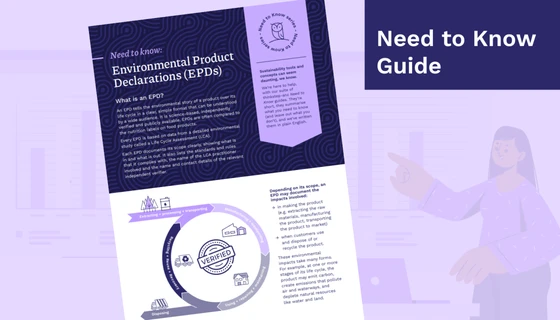
Environmental Product Declarations (EPDs)
Promote your product with a verified, public summary of its environmental impact. All EPDs start with LCAs.
LCA software and data
Do your LCA in-house. Our experts will provide the Sphera LCA for Experts software and data you need, and coach your team.
Circular economy
Make your business more resilient and get the most out of the resources you use. Life cycle thinking is an important part of circular economy.